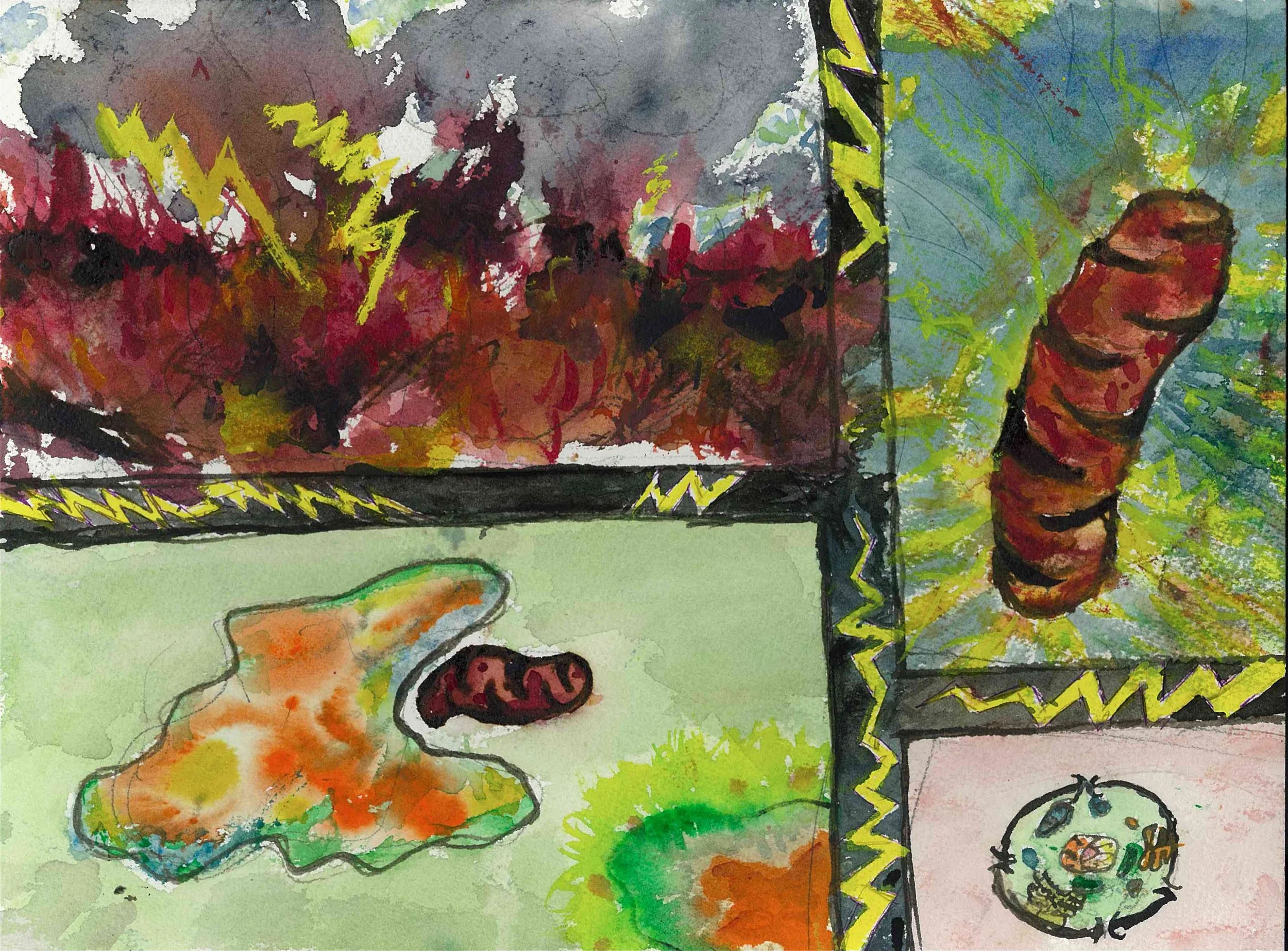
BASIC ANIMAL CELL Introduction
Look in the mirror. Can you believe that you are made of 200 trillion cells? Each cell has a life of its own. The cell eats, goes to the bathroom, and has a distinct and important job. Guess what? Most of the cells in your body are micro organisms that are not even human!
Topic:
Living things are made up of many cells which work together. Each basic animal cell has several little organs called organelles. These organelles, like the body’s organs, have different roles. The organelles work together so the cell can do its job.
Basic Questions:
1. What is a basic animal cell?
2. How were cells discovered?
3. Describe and explain the form and function of each organelle. 4. How can understanding cells help you to be more healthy?
BASIC ANIMAL CELL Model Steps: FORM and FUNCTION of the ORGANELLES
1. NUCLEUS
form:
-in the center, with a membrane that has holes
-filled with chromosomes of twisted DNA
function:
-controls cell by making proteins
2. rough Endoplasmic Reticulum (rough E.R.) form:
-curvy, bilipid membrane
-lots of surface area
-covered in ribosome dots
function:
-creates proteins
3. Smooth E.R.
form:
-curvy, bilipid membrane
-lots of surface area
function:
-creates lipids and fats
Suggested Links To Get Started:
1. Start with Drawing States of Matter here.
2. Sing along with Matter music videos here.
Check out the matter videos by teacher and rappers from our school community.
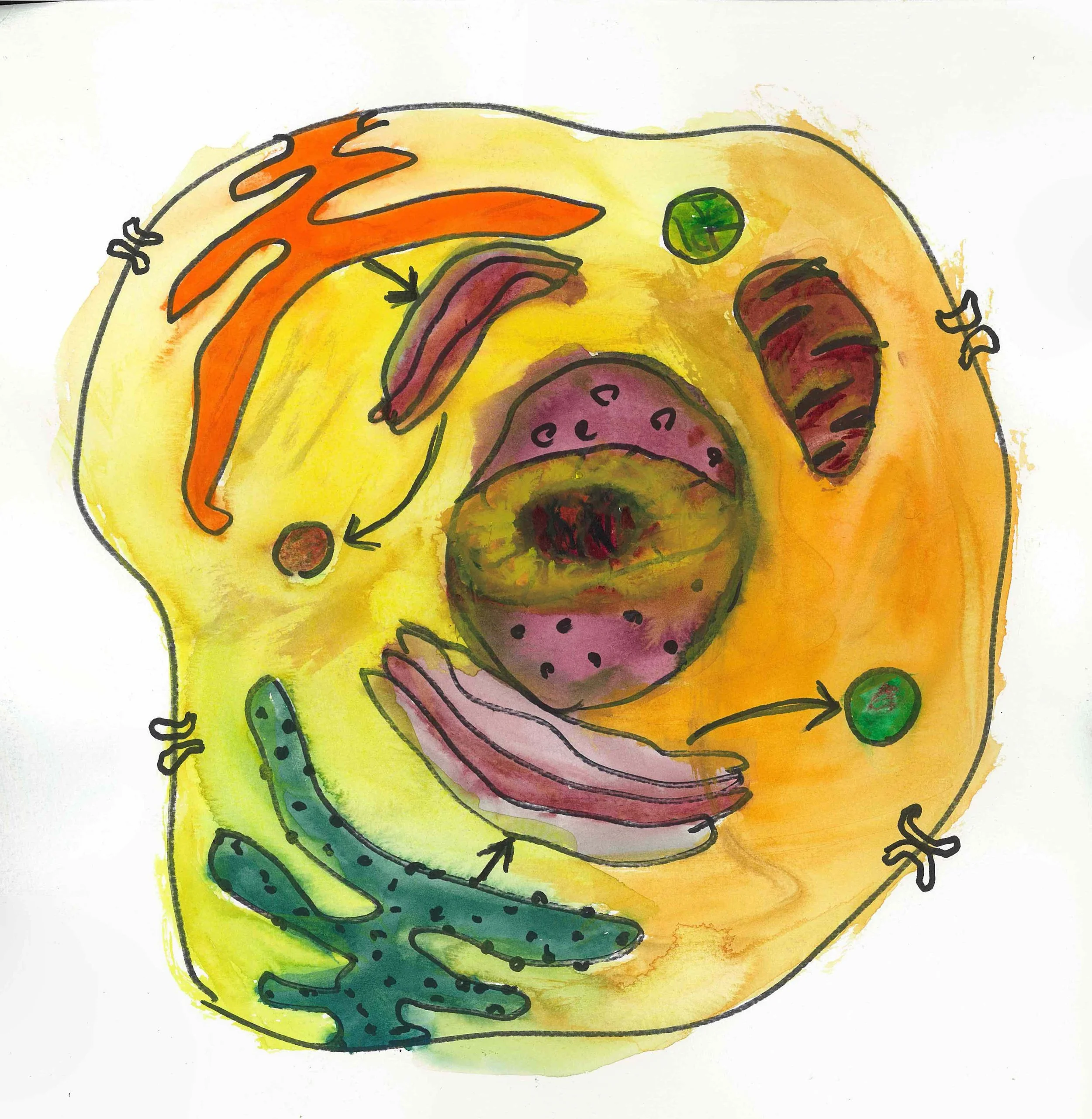
4.Golgi Body
form:
-5-8 cup-like compartments stacked into each other
function:
-changes, sorts, and packages proteins and lipids made by the E.R.
5.Vacuoles
form:
-bubble of bilipid membrane
function:
-carries/transports lipids and proteins released from the golgi body
6.Mitochondrion
form:
-oval shaped with two layers
-inner layer folded many times
function:
-convert food to energy
-break down glucose into ATP
7.Lysosome
form:
-bilipid membrane bubble containing strong acid
function:
-like a chemical toilet, breaks down waste and cellular debris