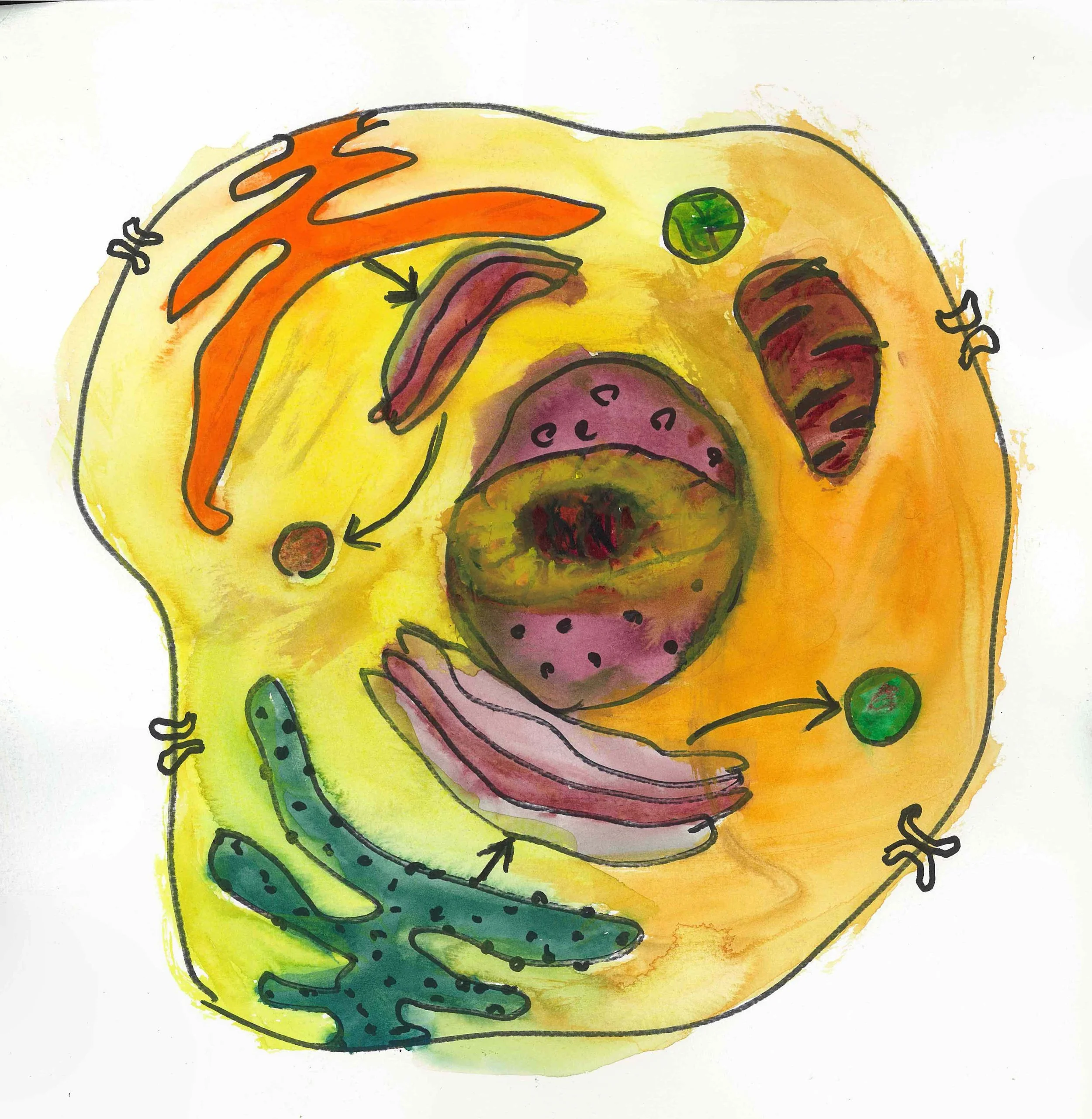
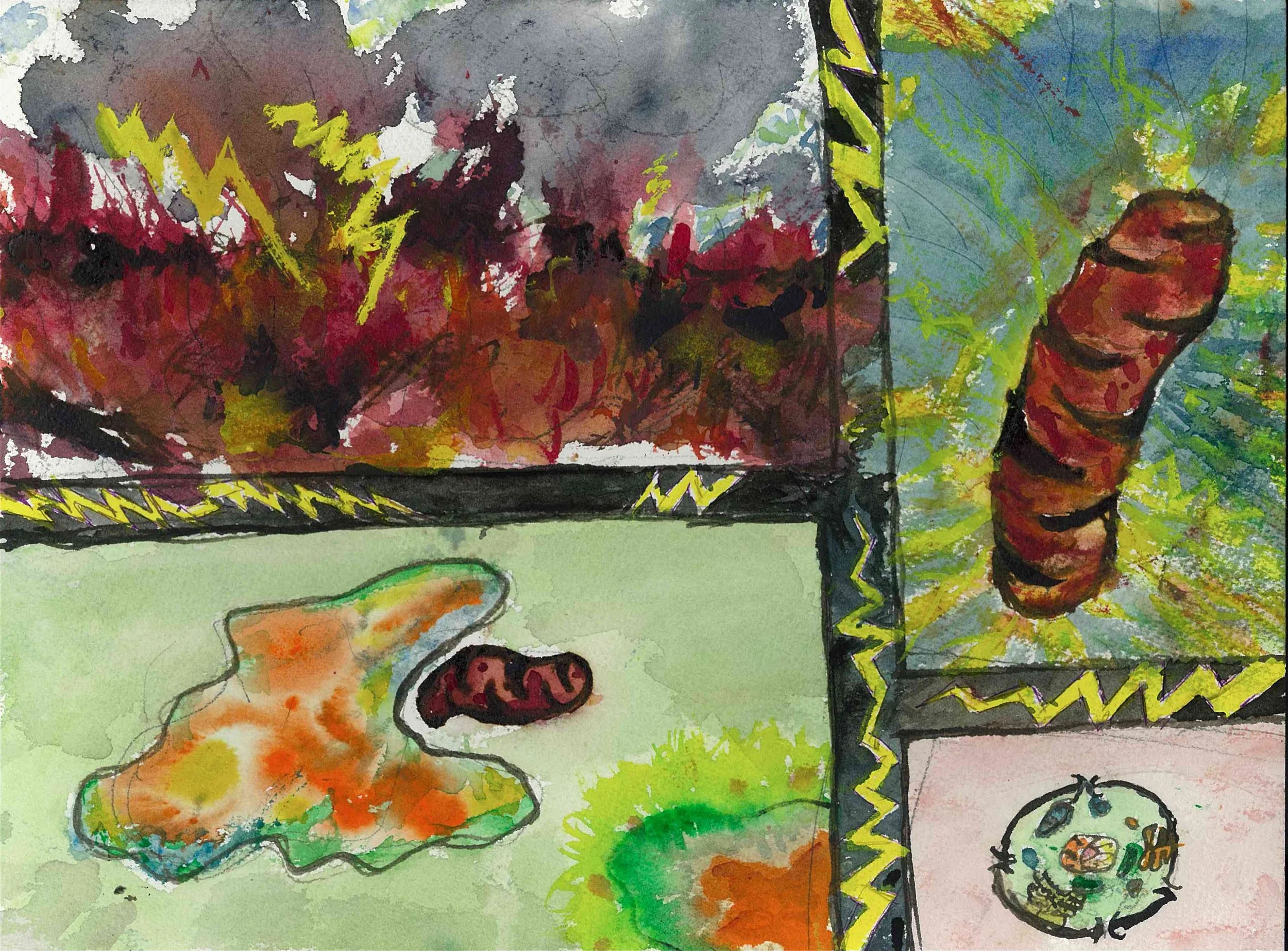
BASIC ANIMAL CELL IN THE NGSS Standards
In the Next Generation Science Standards (NGSS), the teaching of animal cells and cell organelles shifts away from the traditional, rote memorization of long lists of organelle definitions. Instead, NGSS focuses on systems thinking, modeling, and the relationship between structure and function.
How animal cells and organelles appear across the grade bands is structured around specific performance expectations, core ideas, and boundaries.
1. Middle School: The Core Standard (MS-LS1-2)
The primary home for cell organelles in the NGSS is in middle school life science under MS-LS1-2:
"Develop and use a model to describe the function of a cell as a whole and ways the parts of cells contribute to the function."
The Emphasis (System over Parts): The standard prioritizes viewing the cell as a coordinated system rather than a collection of isolated parts. Organelles are studied to see how they contribute to macro-level life processes (like taking in food, getting rid of waste, and providing energy).
Specific Organelles Highlighted: While textbooks often feature dozens of organelles, the NGSS evidence statements and clarification statements explicitly focus on a core subset for animals, specifically the nucleus and mitochondria, alongside the universally required cell membrane. (Note: Chloroplasts and cell walls are also part of this standard, but apply to plant cells).
Strict Assessment Boundaries:
Assessment of organelle structure-function relationships is strictly limited to the cell membrane (where students look at how its structure as a boundary controls what enters and leaves).
For other animal cell organelles like the nucleus or mitochondria, assessment is limited to their relationship to the whole cell, meaning students do not need to memorize complex biochemical pathways (like the exact chemical steps of ATP synthesis or detailed transcription mechanics).
2. High School: Scaling Up to Hierarchical Organization (HS-LS1-2 and HS-LS1-7)
By high school, the focus shifts from individual cells to how cellular structures fit into broader biological systems:
HS-LS1-2: "Develop and use a model to illustrate the hierarchical organization of interacting systems that provide specific functions within multicellular organisms." Here, animal cells and their internal components form the base level of a complex hierarchy (Cells $\rightarrow$ Tissues $\rightarrow$ Organs $\rightarrow$ Organ Systems $\rightarrow$ Organism).
HS-LS1-7: "Use a model to illustrate that cellular respiration is a chemical process whereby the bonds of food molecules and oxygen molecules are broken and the bonds in new compounds are formed resulting in a net transfer of energy." This brings organelles like the mitochondria back into focus, connecting their structure directly to matter and energy flow (converting glucose and oxygen into usable energy/ATP).
3. How the Three Dimensions of NGSS Shape This Topic
NGSS instruction integrates three distinct dimensions when teaching animal cells:
Disciplinary Core Ideas (LS1.A: Structure and Function):
All living things are made of cells.
Within cells, special structures are responsible for particular functions.
The cell membrane forms the selective boundary controlling matter transfer.
Science & Engineering Practices (Developing and Using Models):
Students are expected to build or use physical, digital, or conceptual models (such as comparing a cell to a factory, a city, or a system of cooperative machinery) to demonstrate how organelle interactions keep the cell alive.
Crosscutting Concepts (Structure and Function):
Students analyze how a microscopic structure (like the folded inner membranes of a mitochondria or the selectively permeable lipid bilayer of a cell membrane) directly dictates its functional capability.
Summary for Educators and Curriculum Design
If you are designing or evaluating a unit around animal cells under NGSS, the goal is not to quiz students on whether they can label a 15-part cell diagram. Instead, the success criteria look at whether a student can explain how an animal cell survives as a system and how specific parts (like the membrane or mitochondria) cooperate to execute life's essential functions.